 PetalMC
Petal & PetalMC
Where this all came from: CraftSerenity, 2011, and what came after.
An IRC channel and a game about blocks
During the mid 2010s, myself (TwelveCans on #google) and a bunch of online friends in an IRC channel on a network called Rizon started exploring a game called Minecraft. I don't remember the exact version we played, but it was pre-beta and around the time that they added the nether. A lot of us wanted a way to scale Minecraft so more players could join, but the server code wasn't really designed for that, we eventually stumbled upon a fledgling project called CraftBukkit, which was trying to answer some of the frustrations with extending the Minecraft server platform and giving operators more control (and tools) over what people did. In fact, the project was so successful that eventually Mojang got involved, and during mid 2011 I was ready to host my first SMP server using CraftBukkit and an engine I built to test its plugin architecture called CraftSerenity.
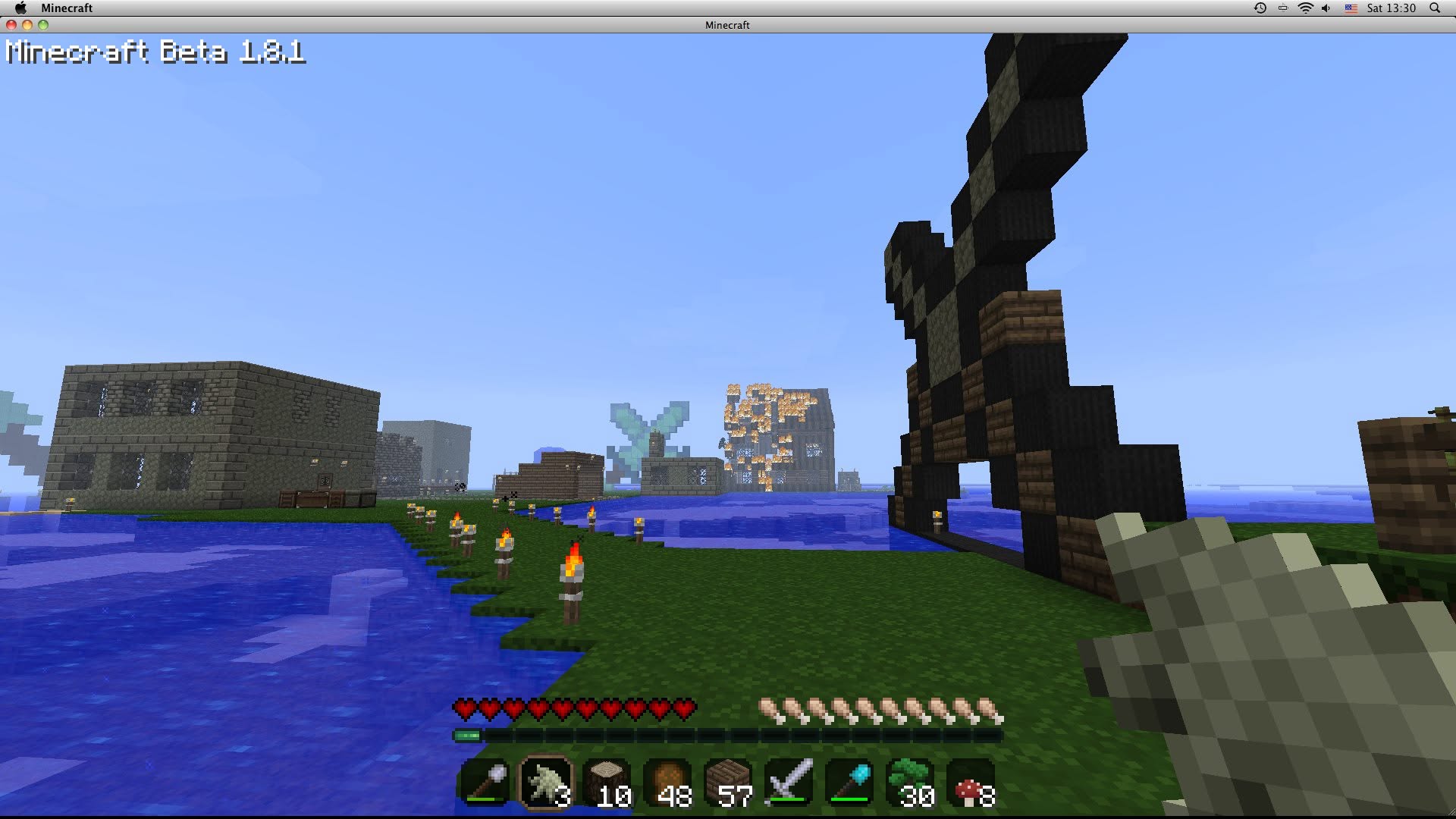
CraftSerenity, summer 2011
CraftSerenity first launched in summer 2011 on Minecraft Beta 1.6 which was the first version of multiplayer that officially added Nether support natively, the CraftSerenity server was a hit and after a few days hit over 30 concurrent players, which was a problem because the slow hard disks machines back then ran on couldn't keep up with the chunk loading & changes, leading to really low tick rates. Regardless, many people stayed and the server evolved.
Griefing, and the tools that didn't exist yet
While hosting CraftSerenity, a type of player emerged that challenged what it meant to run a Minecraft server, for every dozen or so genuine players looking to stake a claim in a world that grew busier every day, there was a player looking not to build, but to destroy. Many would be sincere at first and then betray groups of players, and in a sandbox game like Minecraft it was not clear whether those players were breaking any rules or playing the game as it were intended. The more egregious kind would instead just pour buckets of lava over the majority of player buildings, a kind of low effort, high impact damage that everyone rightly called 'greifing'.
Not wanting to let go of the community that was forming, but exhausted by the lack of options to deal with them, plugins back then were immature and though projects existed, they often targeted older versions of the game or were incompatible with Bukkit, which itself took a lot of effort to maintain and keep up to date. For this reason I started working on a unique form of Anti-Cheat and backup that respected the performance limitations of hard disks, used a lot of RAM and techniques to catalogue player activity and roll back harmful activity. The system was one of the first of its kind, and we officially launched it during Beta 1.7.3 of Minecraft.
Beta 1.7.3, the golden era
Beta 1.7.3 was probably the golden era of Minecraft for me, in my opinion it became a different game during 1.8 which added sprinting, enchanting, experience, the game became less of a sandbox where you decide your own fun, and more of a game with goals and purpose. You had to get an enchanting table, get the best enchants and min-max those aspects of the game. For a lot of players including myself, that was a tonal shift that made the game something else, not worse or better but different.
During the 1.7.3 days, traversing around the world was slow, this was for good reason. Chunk generation was expensive, internet connections were slower, streaming chunks to players too quickly could cripple a server so much that players literally get disconnected if someone hops in a Minecraft and moves in one direction. Back then, Mine Carts were fast ways of getting around because you couldn't sprint, and they required time investment and effort to make them worthwhile, you had to with purpose decide we need a route from A to B and commit the resources necessary. This led to people building rollercoaster setups and builds that were effectively rollercoaster tours through their build, and it was a genuinely sweet thing.
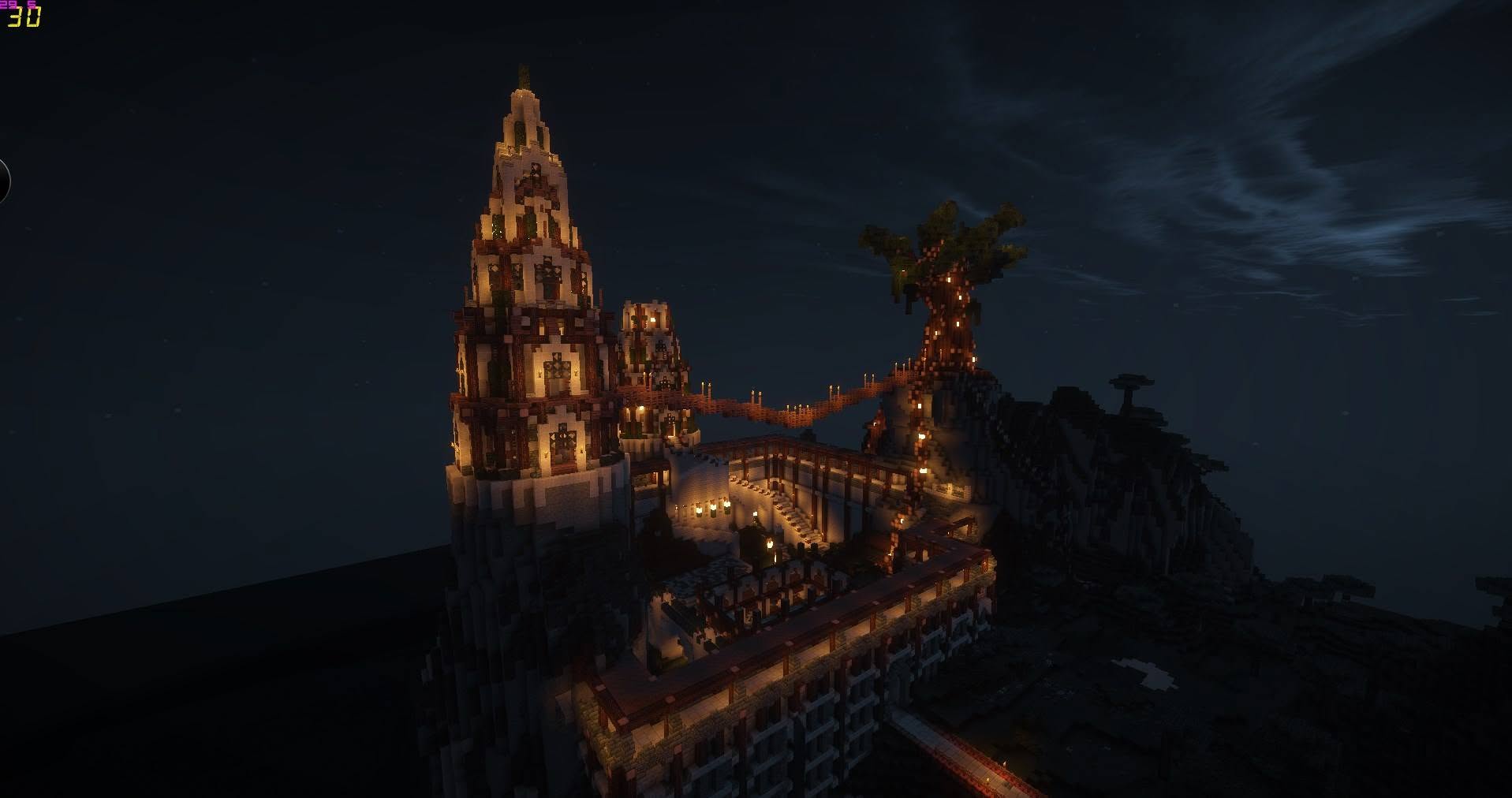
At its height
During it's height, CraftSerenity average 30 concurrent players with peaks upwards of 150 players. We built unique challenge systems that enabled trial chambers, shopping malls and other systems that built upon (but not replaced) the standard experience and that was why people kept coming, it gave people an opportunity to form meaningful long term friendships and a space to exist in that felt permanent enough that it was worth expending the effort to stake a grand claim and build something incredible. The glue that held it all together was a shared respect for the effort that led to creating something wonderful.
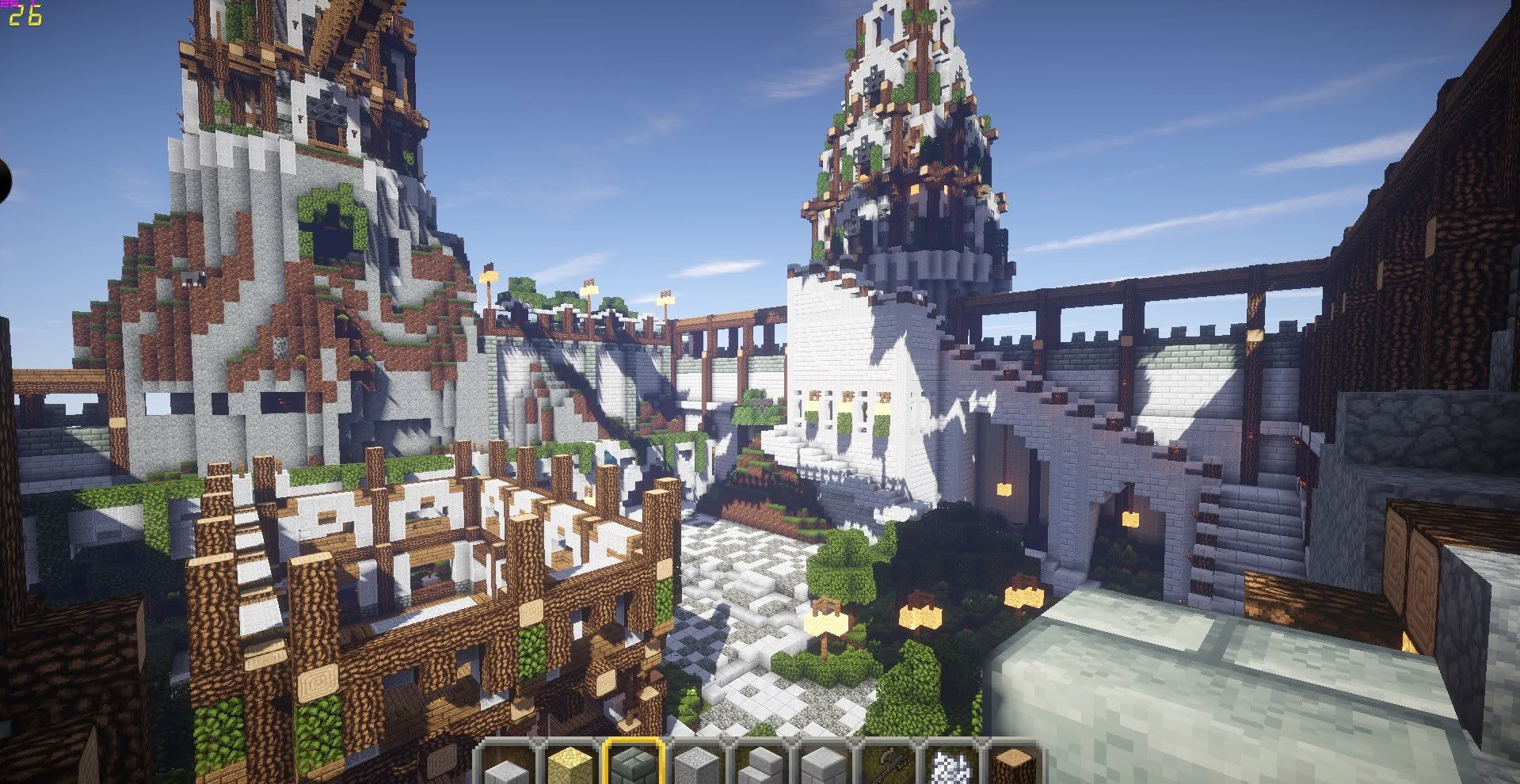
Watching the game grow up
Due to my close collaboration with the Bukkit project, and a player who many know might know as C418 for the music they created for Minecraft during its early days frequenting the server, I had a close eye on what was coming next for Minecraft and I watched the game evolve from a claustrophobic but fun block placing/destroying simulator to an expansive world that you could explore and exist in. The donations provided to the server helped me and having a space where I translate my programming abilities into fun for my friends and people around me was transformative, I doubt I'd have the career I do today if not for that environment. That is why hosting servers, and building experiences on those servers is so dear to me.
Back then, seeing a player construct a megastructure carried real weight and meaning because it was genuinely imposing in both the scale and the impossibility of replicating it yourself, just because sometimes building huge structures required a co-ordinated effort from multiple players and for that reason it carried weight and impact.
On farms and automation
Back then, farms existed, and automation was used but seldom as a tool to bring 'creative' to the survival experience. The reason for this is that farms are inherently selfish machines, they exploit game mechanics to provide resources, and those game mechanics are expensive computationally that on a shared server mean that you as a player are carving out a disproportionate slice of server resources so that you can have access to resources that, if other players were to do the same, would diminish the experience of both. For this reason, back during the beta days, most players saw mob farmers and heavy automations with disdain because they knew it would be at the detriment of their experience.
Fast forward today, and the game has so many mechanics that can be both exhausting and dizzying, players form a meta and the emergent gameplay is optimisation at the expense of discovery. But the resource requirement of mob farmers is not something talked about as often, given over a decade of optimisation and hardware improvements, the selfish argument holds less true for isolated cases. At scale however, it is still an issue. There is also the issue that the journey through exploration and discovery, effort is replaced with a tedious process of macro-optimisation where the way systems interact is a problem to be solved rather than a world to be lived in. Instead of exploring the world and seeing what the game has to offer, players rush to building contraptions that remove the need entirely. Many times I ask the question, if you want to optimise away most of the game so that you have everything handed to you on a platter, aren't you just looking for a creative experience? I don't say this as an affront, but rather as a genuine question, because there is a huge leap between surviving and thriving at the expense of others.
Mob farms aren't infinite resource generators, the ceiling is how fast the server can service your request, and the worst part is that farms bring down the ceiling for all other players. The more mob farms that are loaded, the more entities being processed each tick, the more entities requiring pathfinding calculations per tick, all eventually lead to a world TPS that prevents normal gameplay. The more farms a player creates, the more of the server's finite resource they are carving out for themselves. Although the ingenuity of farms and automated systems is commendable, and represents an amount of effort in itself, all the existing issues still stand and it's one borne out of macro-optimisation, the same players build farms and then get bored and complain there is nothing to do, the same way that a player with many spawned in items via creative or other means is less likely to find the survival experience fulfilling.
Back in 2012 when I ran CraftSerenity and had over 100 players, the difference was noticeable, a handful of players creating creeper farms would mean that many players frequently disconnect, and back then the only real reason to do so was to craft TNT which was so often used to destroy other player's bases.
A shared respect for effort
The glue that holds together Minecraft servers was, and I believe still is, a shared respect for effort. The game is so diverse and a different generation of players have grown up with Minecraft and a 'meta' has formed where automation and farms are a natural part of 'progression', although I fundamentally oppose the concept given Minecraft's roots as a sandbox experience, I respect that the construction of a farm and the effort involved to create it is a journey in itself, and the fruits of that labour are a near endless supply of items that make traditional means of gathering feel obsolete and a waste of time. I truly think this is a self imposed problem, and one that causes more harm than good. All of my experience hinges on the tried and tested observation that shared challenges and limitations breed creativity and the outcome has inherent value, I strongly believe that's at the core of the human experience, and the solution to many of these problems is to ensure that effort is fairly rewarded, and that players aren't able to take more than their share of the shared resource (server).
What PetalMC is
PetalMC is a server core built on top of PaperMC that introduces an economy, expeditions, arenas, duels, pocket dimensions, parties, vendors, special worlds, over 300 custom items and blocks, and state-of-the-art anti-cheat and base protection systems. It is a love letter to Minecraft and my attempt at enhancing the Vanilla experience in a way that feels familiar and accessible (requiring no client-side mods). It is my hope one day for the experience to become tuned well enough that one day I can open up the experience to a audience that perhaps wasn't around to experience or appreciate the 'golden era' of Minecraft, in a way that respects that the game has evolved and with it the expectations of players.
I have personally invested over $600 in custom models, licensed audio, textures, maps and assets for the PetalMC experience, along with months of my own time to provide an integrated experience. The server core does not use popular mods like Essentials, all functionality including base protection, teleportation are hand-crafted for the PetalMC experience only. The PaperMC server has only Multiverse-Core for world management, WorldEdit for admin build tooling and the PetalMC engine, that's it. All commands and systems that players interact with, including custom AI, vendor logic, teleportation, base protection, custom blocks are all driven by the singular PetalMC mod which integrates tightly into PaperMC.